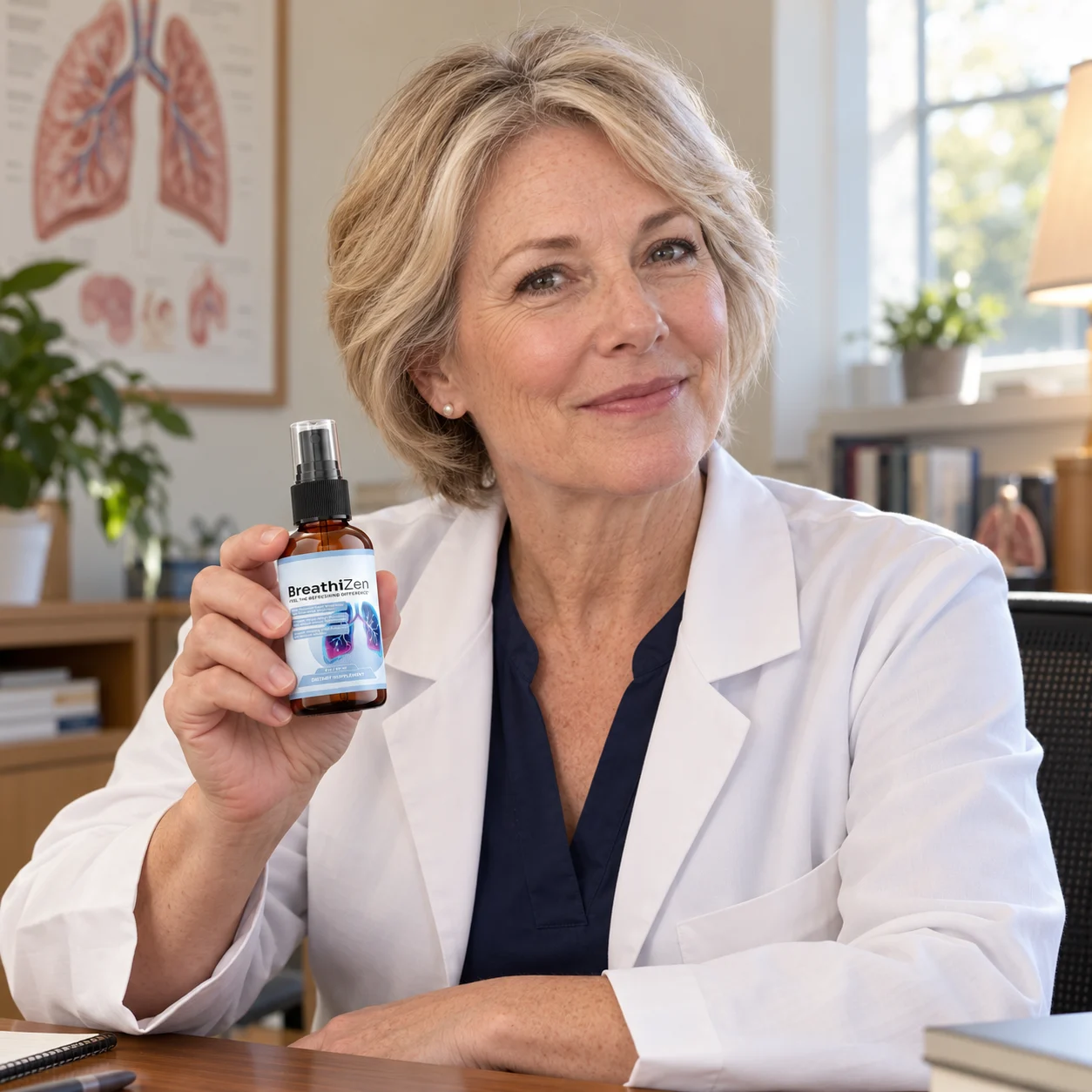
Of all the breathing techniques in circulation, this is the one you are most likely to be taught by an actual clinician rather than an app. There is a reason for that, and it is mechanical rather than mystical.
The technique
- Relax your neck and shoulders. Deliberately drop them — most people hold tension there without noticing.
- Breathe in through your nose for a count of two, mouth closed.
- Purse your lips as though you were about to whistle, or cool a spoonful of soup.
- Breathe out gently through those pursed lips for a count of four.
The out-breath should be roughly twice the length of the in-breath, and it should be gentle. You are not forcing air out.
What the pursing actually does
Narrowing the opening creates a small amount of back-pressure in the airways on the way out. That pressure helps hold open the smallest airways, which can otherwise narrow or collapse early during exhalation — particularly in lungs where the elastic tissue has lost some of its recoil.
Keeping them open slightly longer means more of the stale air leaves. Less trapped air means more room for the next breath, which is why people often describe the effect as the breath suddenly having somewhere to go.
Using it during exertion
The real value shows up on stairs, hills and anything carried. The instinct when you get short of breath is to breathe faster and shallower, which traps more air and makes things worse. Pursed-lip breathing is a way to interrupt that loop deliberately.
A pattern that works for many people on stairs: breathe in during one step, breathe out through pursed lips over the next two. Slower than you would like. That is the point.
Practise it before you need it
Learning a new breathing pattern while already breathless is close to impossible. Practise it four or five times a day while sitting calmly, for a week or two, until it is available without thinking. Then it is there when the stairs are.
What it is not
It is not a treatment, it does not improve lung function on a test, and it does not replace any prescribed medication — above all not a rescue inhaler. It is a way of using the lung function you have more efficiently in the moment.
When breathlessness needs a doctor instead
Breathlessness that is new, breathlessness during ordinary activity, breathlessness that wakes you, or breathlessness with chest pain, swollen ankles or blue-tinged lips is not something to manage with a technique. That is a prompt to be seen, and promptly.
Three Botanicals, Once a Day
Packages from $49 a bottle, every one with the same 60-day guarantee.
See Package PricingThese statements have not been evaluated by the Food and Drug Administration. BreathiZen® is a dietary supplement and is not intended to diagnose, treat, cure or prevent any disease. Breathing techniques described here are general wellness practices, not medical treatment. Prices, shipping and guarantee terms are set by the official retailer and confirmed at checkout. Speak to your doctor before starting any supplement.
← Back to all articles