Lung function follows a curve. It climbs through childhood, peaks somewhere in the mid-twenties, holds roughly flat for a stretch, then declines slowly for the rest of your life. That happens to lifelong non-smokers who exercise daily. Knowing the shape of the normal curve is what lets you notice when your own experience has departed from it.
Three things that genuinely change
The chest wall stiffens. Rib joints and cartilage lose flexibility with the decades, so expanding the ribcage takes marginally more work than it used to.
Lung tissue loses elasticity. Quiet exhalation runs on elastic recoil, and as that slackens a little more air lingers once the breath is done.
The diaphragm weakens. Being muscle, it declines the way muscle does — which is also precisely why it responds better than the other two to staying active.
What that feels like day to day
For most healthy people, very little. There is substantial reserve built into the respiratory system, and decades of gradual change tend to eat into the spare capacity without reaching what you actually use. A long hill may ask more of you at sixty than it did at thirty. That is usually the extent of it.
What actually helps
- Keep moving. Aerobic activity protects how efficiently your body uses oxygen. The real risk is the loop where doing less makes effort feel harder, which prompts doing less again — the loop, not the birthdays.
- Train the diaphragm. Five minutes a day of belly breathing targets the most trainable part of the system.
- Stay current on vaccinations. The immune response to respiratory infection becomes less brisk with age, and in terms of real consequences this probably matters more than any of the mechanical changes above.
- Stop smoking, whatever your age. The rate of decline flattens after quitting, and that remains true decades into a habit.
- Manage indoor air. Humidity in a sensible range, filters changed, ventilation while cooking.
What the numbers mean if you have had a test
Spirometry results are reported as a percentage of predicted values for someone of your age, height, sex and ethnicity. The prediction already accounts for age, which is why "normal for your age" is a meaningful phrase rather than a polite one. A result well below predicted is worth asking about regardless of how old you are.
Where a supplement sits in all this
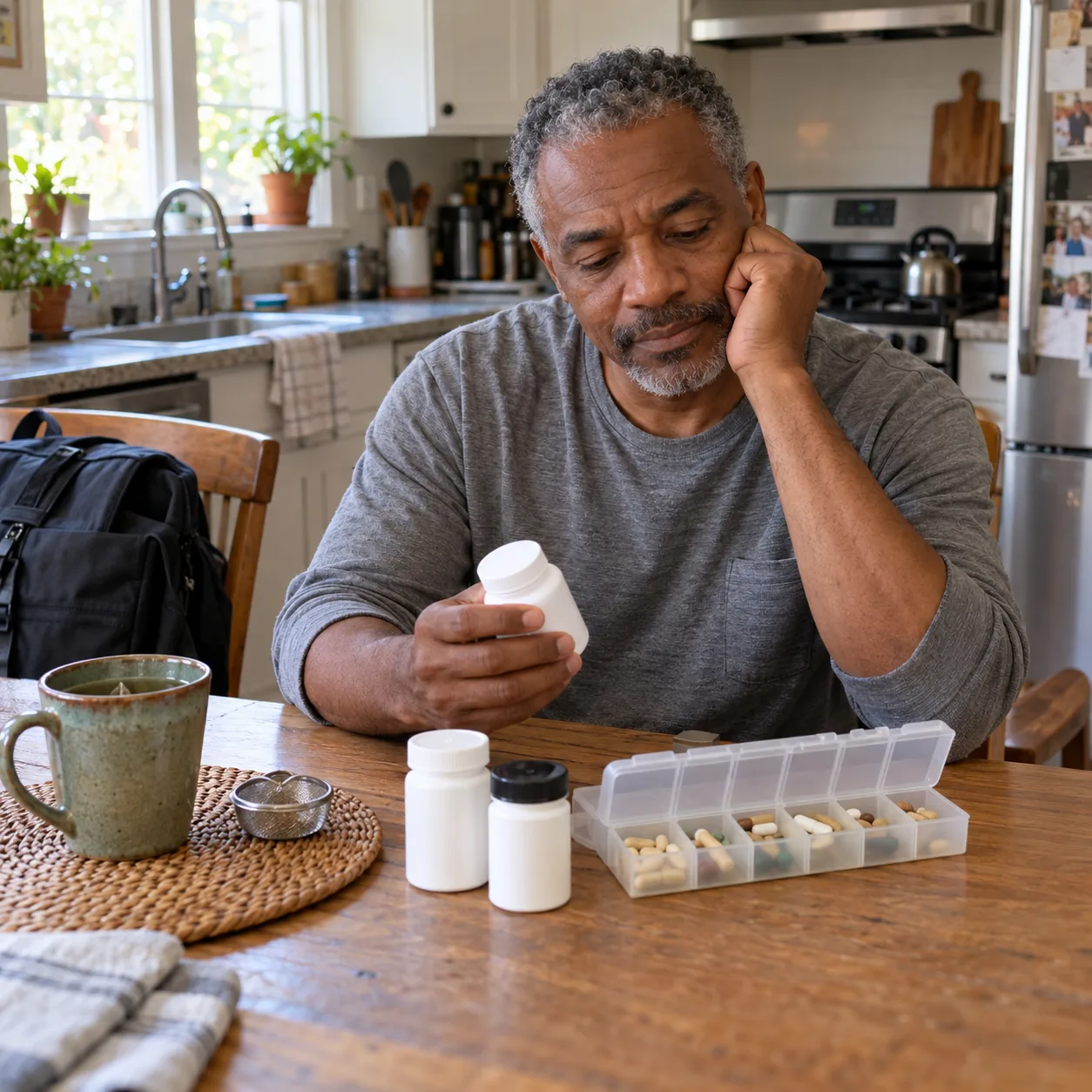
Modestly, and beneath every item on that list. Nothing in a bottle reverses structural change in lung tissue, and a product advertising restored lung function is promising something measurable that it has not measured. A daily botanical routine belongs at the bottom of the list, not in place of what sits above it.
Three Botanicals, Once a Day
Packages from $49 a bottle, every one with the same 60-day guarantee.
See Package PricingThese statements have not been evaluated by the Food and Drug Administration. BreathiZen® is a dietary supplement and is not intended to diagnose, treat, cure or prevent any disease. Breathing techniques described here are general wellness practices, not medical treatment. Prices, shipping and guarantee terms are set by the official retailer and confirmed at checkout. Speak to your doctor before starting any supplement.
← Back to all articles